Core Concepts
Liquidity Sweep
Learn what a liquidity sweep is, why price pushes through obvious highs or lows, and how to separate sweeps from true continuation.
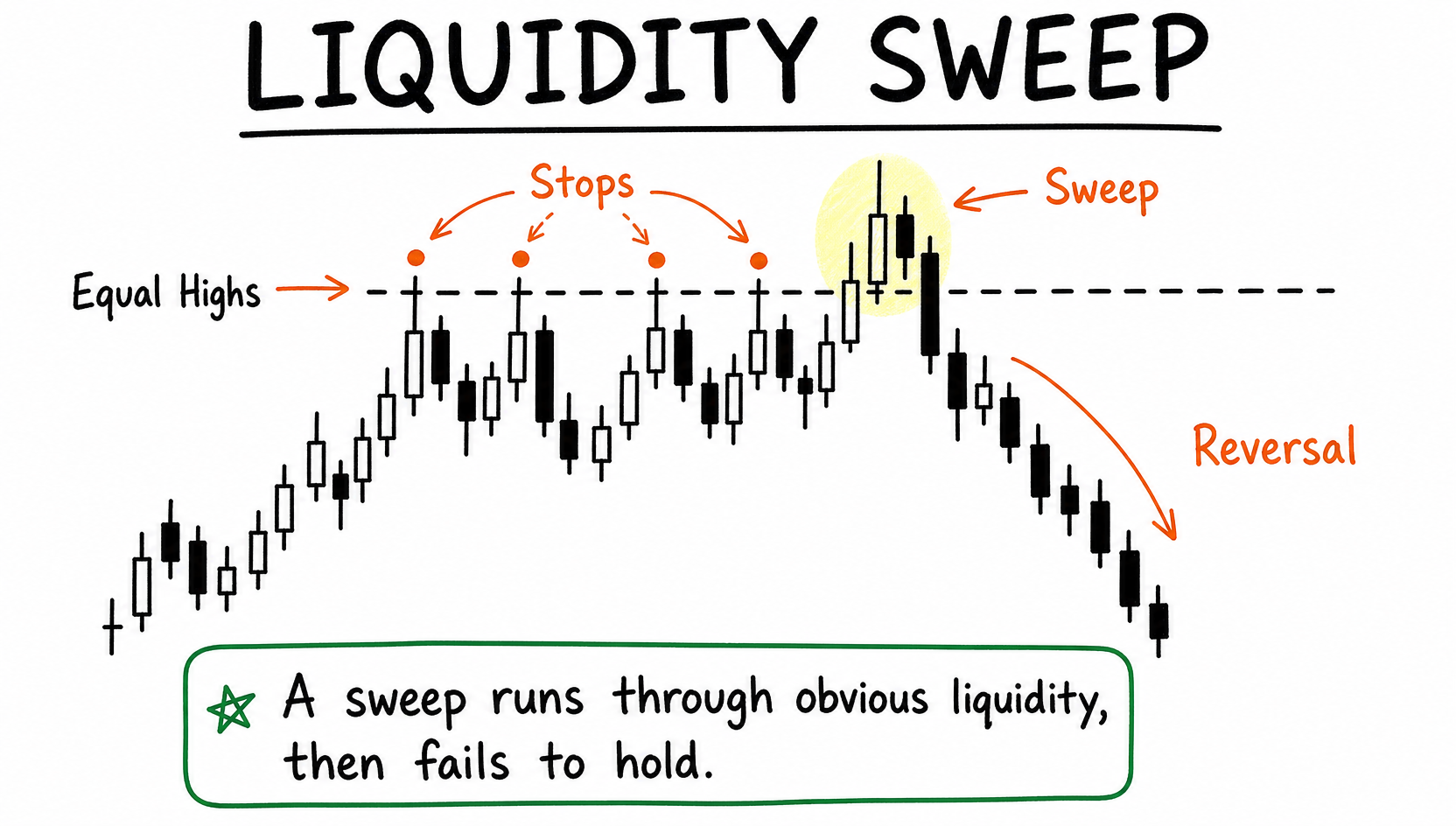
A liquidity sweep happens when price runs through an obvious high or low, triggers orders around that area, and then reveals whether the move had real continuation behind it.
Why sweeps happen
Obvious highs and lows attract stops, breakout entries, and defensive positioning. That concentration creates liquidity.
A move through those levels can therefore do two things at once:
- collect flow from obvious positioning
- test whether the market truly wants to continue
What a sweep can look like
- a fast wick through a prior high or low
- a brief breakout with little follow-through
- a sharp move followed by immediate rejection
The key is not the sweep itself. The key is what price does after the sweep.
Sweep or true break?
Ask:
- did price accept beyond the level?
- did structure improve in that direction?
- was there strong follow-through, or just a quick grab and reversal?
This is where BOS vs MSS becomes useful.
Good companion reads
Educational content only. Not financial advice.